Tips for Autumn
Halloween
Halloween can be loads of fun for kids, but truly scary for others. Consider this:
- Never force your child to wear a costume.
- Let your child help select a costume, within reason, and depending on age. While you may love the idea of a bumblebee suit with wings and bobbing antennae, a silly shirt or a handheld prop such as a magic wand or light saber may be all that he can handle.
- Wearing a mask may be intolerable. Let him wear a costume and hold the mask with him hands or skip it all together.
- If costumed, make sure it’s something she can partially or fully remove on the sidewalk or at a party so she doesn’t have to go home if she becomes uncomfortable.
- Now is a great time to experiment with face make-up as tactile exploration. However, bring baby wipes to remove it just in case.
- Avoid sugar overload. Yes, this may be the one time of year you allow your child to fill up on candy, but don’t overdo it!
- If attending a Halloween party, follow the party tips we outline in our book, Raising a Sensory Smart Child, including:
- Explain in advance what to expect at the party.
- Identify a “safe spot” to take breaks if needed to avoid sensory overload.
- Bring a comfort object or a hand fidget to get needed calming input.
Thanksgiving Tips
Thanksgiving can be a wonderful, warm family holiday, but it can be trying for kids with sensory challenges. Here are a few tips:
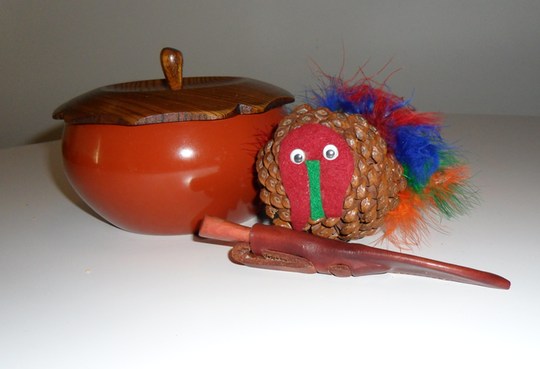
- Holidays are a great time to work on fine motor skills. Take a look at the craft ideas in holiday season magazines and by entering the name of the holiday you celebrate into your search engine (Google, etc.). Young children may enjoy adding colored feathers and wiggly eyes to a pine cone to make a turkey.
- Cooking is a wonderful sensory experience. Let your child help you pour, mix, blend, and decorate holiday food. Even if you’re going to someone else’s home to celebrate, help your child to prepare a special side dish or dessert to bring along.
- Review in advance what will happen during the day, including who will be there, what activities will happen, and what your child should do if he or she feels uncomfortable (ask for a break, use a sensory tool like a hand fidget, and so on). Predict when your child may need your help to handle his sensory needs.
- Have your child engage in his or her sensory diet activities such as jumping on a mini-trampoline, using the swings, doing jumping jacks, wheelbarrow walking, and so on, BEFORE asking him or her to sit nicely at the Thanksgiving dinner table for a long time. Allow your child to take movement breaks if he needs them. A sensory seeking child may need to get up from the table after 20 minutes or so to get some needed movement or tactile input. A hypersensitive child may need a short break in a quiet, low stimulation part of the house. Again, it’s better to take breaks than to have a meltdown at the holiday table.
- Don’t force your child to eat something “gross” just because it’s the mandated holiday food. If you know your child won’t eat turkey, bring along something nutritious he will eat. Certainly offer him some turkey; this may be the time he’ll finally try it, especially if there are beloved relatives who seem to like it. If need be, explain to others that you think food battles are unproductive, and that you are working on expanding your child’s food choices. Sure, they may think you’re overindulgent, but that’s far better than engaging in a food battle likely to lead to a meltdown!
- While you may LOVE the smell of roasting turkey, stuffing, and sweet potatoes, these aromas may be too intense for your sensitive child. If so, ventilate your home with an open window, even if you need to turn up the heat. Find a smell your child DOES like (often kids like vanilla or rose) and make that smell available either through a scented candle or an essential oil.
Next month, we’ll have more tips for the holiday season. Meanwhile, we wish you and your entire family a very happy Thanksgiving!
Quick Tips for Sinus Comfort
Are your sinuses bothering you? Between moldy fallen leaves, dry household heating, and cold/flu season, you and your child may wind up with clogged, swollen sinuses that make you both miserable. Here are a few quick tips:
- Use a plain, drug-free sterile saline nasal solution to rinse out and moisturize nasal passages and thin out the mucus. Try Simply Saline or Little Noses, available at most drugstores.
- Take a steambath and breathe deeply. Turn up the hot water, close the door, and enjoy the steam vapors. Great for the skin too!
- Use a humidifier in your bedroom or work area, being sure to keep it clean.
- Eucalyptus can help open up nasal passages. Sniff eucalyptus essential oil or on a tissue/handkerchief, or add eucalyptus oil or actual leaves to boiling water, turn off the stove, and breathe in the steam. Or try putting a few dabs of Vick’s VapoRub beneath your nostrils. It’s a very intense smell with a warm goopy feeling that you and your child will either love or hate.
- If you have chronic sinus problems, consider whether you might have food allergies or sensitivities that might contribute. Try eliminating ALL dairy for two weeks and see if that helps. Or try eliminating all wheat products for two weeks. Work with a nutritionist or allergist if you suspect food reactions.
Backpacks and School Bags
Millions of children carry backpacks to school, and more than half carry too much weight, resulting in neck, shoulder, and back pain — negatively affecting their spine and posture, breathing, and resulting in fatigue.
The American Occupational Therapy Association recommends that your child carry no more than 15% of his or her body weight (or less if your child has any issues with low muscle tone or strength, respiratory issues, etc.). Talk to the school about reducing backpack weights.
Look for lightweight versions of recommended school supplies; keep a set of duplicate textbooks at home; clarify assignments so that your child doesn’t take home all of his texts when he just needs one. Try one of the rolling backpacks, but keep in mind that your child will probably need to hoist it onto the school bus and up and down staircases.
See Raising a Sensory Smart Child for more on advocating for your child at school, handling holidays and parties, and practical solutions for issues such as grooming, dressing, picky eating, and more.
© 2004-2023 Lindsey Biel

Share this page: