How to Find the Right OT
-
If your child is under age 3, she is eligible for evaluation and services (usually free) through your state’s early intervention program. In addition to OT, your child may eligible to receive physical therapy, speech language therapy, special education and other services. When your child “ages out” of EI at age 3, your EI service coordinator will help you transition to services through your local school system.
-
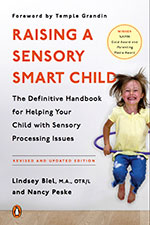
Ask your local school district/school board for an evaluation by an OT if your child is over age three. Because many schools don’t recognize sensory problems or feel sensory issues are not something they are required to address, notify them of any developmental delays and/or functional deficits that impact your child’s abillity to fully participate in and benefit from the educational program. Should “related services” such as OT be recommended, the school must provide this service at no charge. The administrator you deal with may be unaware of a particular OT’s expertise. While there are many wonderful OTs working in the schools with strong backgrounds in sensory processing, others may focus on handwriting and motor skills. We suggest you politely insist that the OT have in-depth expertise in sensory processing issues even if that means working with an independent OT provider. Our book explains this in greater detail, including ways to advocate for your child at school and get the services you need.
-
You always have the option to hire an OT privately. Depending on your insurance plan, you may get coverage for OT of your choice. Or you may be asked to choose from in-network providers, rarely specialists in pediatric sensory issues (many OTs specialize in orthopedics, for example).
-
Ask your pediatrician or local parent advocacy center for a referral.
-
STAR Institute has a resource directory of OTs, physical therapists, speech language pathologists, and others who work with people who have sensory processing challenges.
-
Find an Occupational Therapist has a resource directory of occupational therapists with descriptions of their practice. Read this section carefully as OTs work with children, teens, adults, and the elderly with a wide range of developmental and physical and mental health issues.
-
In Canada, go to Canada Association of Occupational Therapists and click on “OT Finder.”
-
In the United Kingdom go to Sensory Integration Education and click on For Parents and Carers: “Find a Local Therapist.”
-
The American Occupational Therapy Association may be able to help you find a local OT. The AOTA website also lists accredited university programs and provides links to state OT associations. The state contact person may be able to put you in touch with an OT who specializes in sensory issues.

Share this page: