Raising a Sensory Smart Child
The Definitive Handbook for Helping Your Child with Sensory Processing Issues
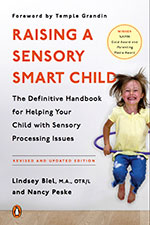
The bestselling, award-winning book on sensory challenges is filled with real-life information and practical solutions including:
- Strategies for sensitivity to noise, textures, smells and more
- Approaches to challenges like brushing teeth, washing hair, and sleep
- Sensory activities for kids teens, adults, families and schools
- How to best support children, teens and adults with autism and sensory issues
- Parenting solutions for behavior and learning issues
- Ways to advocate for your child at school, empower your child in the world and more!
Available at your local bookstore and online in paperback, audiobook, and Kindle editions. You’ll find the Spanish language paperback on Amazon
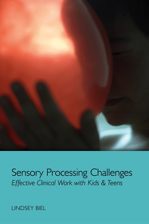
Sensory Processing Challenges
Effective Clinical Work with Kids & Teens
Lindsey Biel’s book for psychologists, therapists, teachers, parents and others available here. Visit Sensory Processing Challenges for more information.
Articles, Webinars, and Podcasts
Check here for free webcasts, podcasts, and articles on sensory overload, noise sensitivity, sensory diet, handwriting, sleep, and more. Featured in the New York Times, Parents, The Atlantic, ADDitude, NPR, Fox Health, Autism Advocate and elsewhere!
Featured articles: * Autism Advocate: Help for Handwriting * New York Times: How to Improve Your Child’s Handwriting * Autism Advocate: Surviving Sound Sensitivity: A Five-Step Plan * Forbes: The Best Sensory Toys for Babies and Toddlers * Autism Advocate: Overcoming Fear of Needles and Shots * Cubby: Expert-Approved Tips on Setting Up a Sensory Room for Kids * Autism Advocate: Sensory Smart™ Strategies for the Holidays
2026 Speaking Engagements:
- Building Visual Skills: Insights and Practical Strategies for the School-Age Child, live full-day webinar– January 12. For information, visit Theramoves
- Sensory Smart™ Strategies for Parents of Neurodivergent Kids – The Polaris Connection Podcast– March 23.
- Managing Sound Sensitivity with Sensory Smarts™ - YAI Hudson Valley Autism Conference at Manhattanville University, Purchase NY– March 30. For more information, visit YAI.
- Using Your Sensory Smarts™ in Daily Life. The Polaris Connection webcast – April 7.
- Sensory Smart™ Strategies for Real Life Challenges webinar, Positive Behavior Supports – April 28.
- Sensory Smart™ Strategies for Real Life Challenges Workshop (Day One) - Szmalec Sensory Integration Center/Warmińsko-Mazurskie Training Center - Torùn, Poland -June 13.
- Sensory Smart™ Strategies for Building Visual Skills Workshop (Day Two) - Torùn, Poland -June 14.
- Building Visual Skills: Sensory Smart™ Strategies for Parents, Adapt Community Network webinar – July 16. More information to come.
- Positive, Strength-Based Strategies: A Sensory Smart™ Approach, live full-day webinar–December 21. For more information visit Theramoves.
Now booking in-person workshops and webinars on topics including:
- Sensory Smart™ Strategies for Real-Life Challenges
- Sensory Smart™ Strategies for School Success
- Sensory Smart™ Sleep Strategies that Work
- Building Graphomotor and Fine Motor Skills
- Maximizing Vision and Visual Processing Skills
- Sensory Smart™ Strategies for Sound Sensitivity
- Managing Stress and Preventing Burnout
- Sensory Friendly Art Works! Fostering Creativity and Sensorimotor Skills
- Sensory Smart™ Potty Training and Toileting Strategies
Here is more about in-person workshops and webinars.
Please contact Lindsey@sensorysmarts.com to discuss your training needs.

Share this page: